Logistics Software Development Company
Fleet tracking, dispatch, driver apps, and shipment visibility for carriers, brokers, and 3PLs, all running on one clean data model.

Supply chain software development: where we focus
Real-Time Fleet Dashboards
Live load status, driver location, and conflict warnings pushed to dispatchers the moment something changes, with no page refresh required.
Dispatch & Route Systems
Routing and scheduling logic built around your actual fleet size and constraints, not a generic optimization algorithm layered over bad data.
Legacy Spreadsheet Replacement
One data model to replace the spreadsheets and whiteboards dispatchers currently reconcile by hand before every decision.
Driver & Proof-of-Delivery Apps
A mobile app with the day's stops, photo and signature capture at delivery, and an offline mode for dead zones that syncs once the signal comes back.
Warehouse & Inventory Tools
Receiving, put-away, pick lists, and barcode scanning on handheld devices, all tied to the same order record that dispatch and billing use.
Customer Tracking Portals
A branded page where shippers check load status, see ETAs, and download proof of delivery without calling your dispatch desk.
Transportation management software development starts with the data
Most logistics operations don't lose money to bad routing decisions. They lose it to the fifteen minutes a dispatcher spends reconciling three spreadsheets and a whiteboard before making that decision at all. Fixing the data model underneath the dispatch process usually matters more than any optimization algorithm layered on top of it.
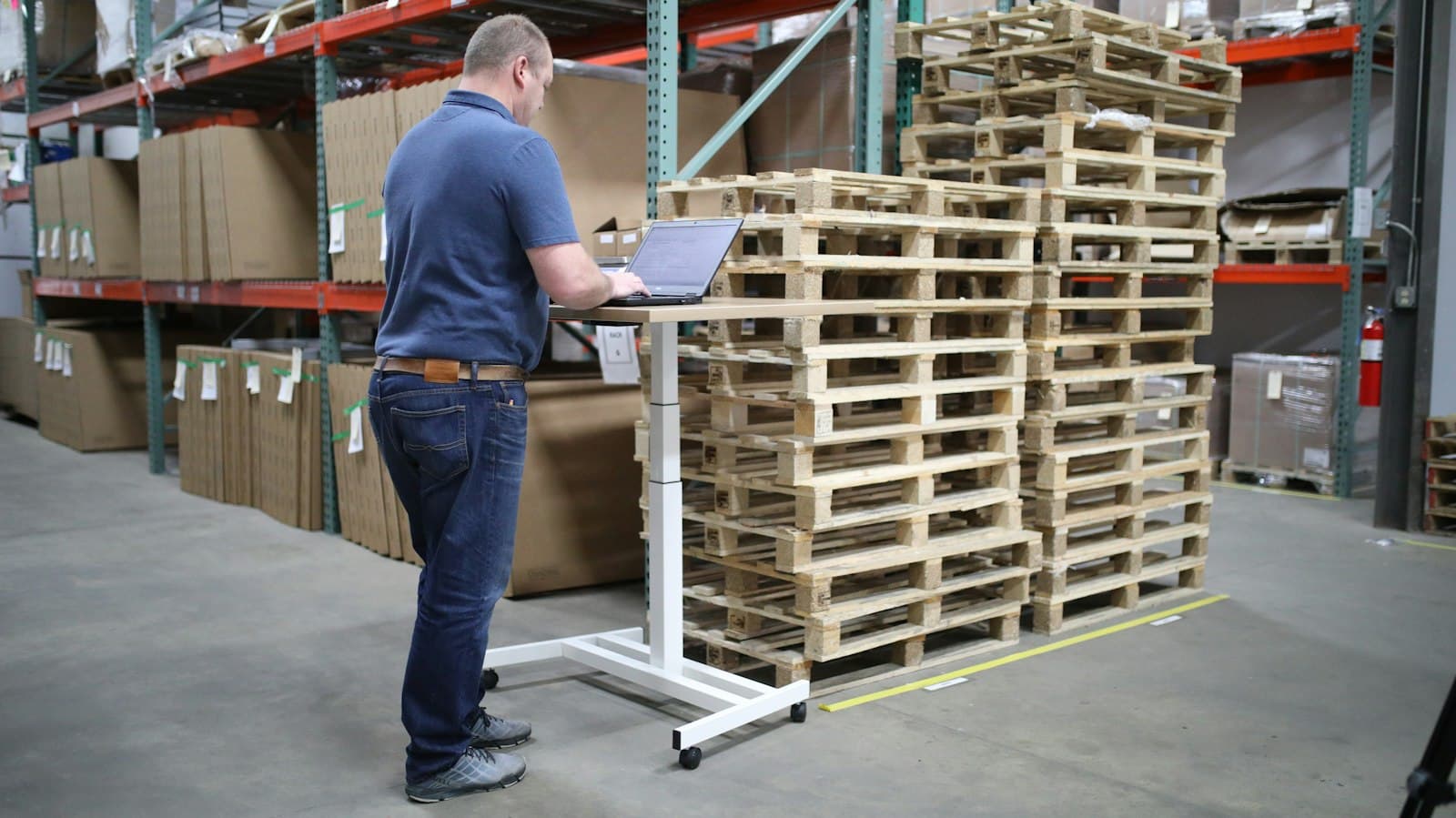
That was the exact problem at Northbeam Logistics, where a 40-truck fleet was tracked across three separate spreadsheets, with schedule conflicts only caught after a truck was already en route. We mapped every one of those data sources into a single PostgreSQL schema before writing a line of UI, then built a Next.js dashboard with live load status, driver location, and conflict warnings pushed over WebSockets, so nobody has to refresh the page. We ran it alongside the old spreadsheets for two weeks so dispatchers could cross-check before cutting over fully. The result: three legacy tools replaced by one dashboard, roughly six hours a week of manual data entry eliminated per dispatcher, and zero double-booked loads since cutover.
If your operation is still coordinating trucks, drivers, or shipments across tools that don't talk to each other, that reconciliation tax is the first thing worth measuring. It's usually bigger than the team realizes until it's gone.
Logistics software development is mostly integration work
A new dispatch screen is the easy part. The harder part is pulling clean data in from the systems you already pay for and sending clean data back out. Most logistics projects we scope touch at least three of these:
- ELD and telematics providers such as Samsara, Motive, and Geotab, for GPS position, hours of service, and engine data.
- Load boards and carrier networks such as DAT and Truckstop, or carrier APIs for rates and tracking.
- Accounting and payments in QuickBooks, Xero, or NetSuite, plus Stripe for card and ACH payments, so delivered loads become invoices and paid invoices close themselves. Our QuickBooks API integration guide covers the options.
- Shipping carriers and platforms such as UPS, FedEx, USPS, and ShipStation for labels, rates, and tracking, or Shopify and Amazon orders for e-commerce fulfillment.
- EDI with shippers and brokers (204 load tenders, 214 status updates, 210 invoices), or the TMS and WMS a customer already runs.
- Mapping and routing APIs from Google Maps, Mapbox, or HERE for distances, drive times, and geofences.
- Twilio for text updates to drivers and customers, and Slack or Microsoft Teams for alerts to the office.
We check what each provider's API actually returns during discovery. Some telematics feeds update every few seconds and others every few minutes, and that difference decides whether a live map is realistic or whether an ETA is the better promise to make to a customer.
The systems logistics software usually connects to
Telematics and ELD
- Samsara
- Motive
- Geotab
Load boards
- DAT
- Truckstop
Accounting
- QuickBooks
- Xero
- NetSuite
- Stripe
 Your app
Shipping
- UPS
- FedEx
- USPS
- ShipStation
EDI
- 204 tenders
- 214 status
- 210 invoices
- TMS / WMS
Maps and alerts
- Google Maps
- Mapbox
- HERE
- Twilio
- Slack
Custom logistics software or an off-the-shelf TMS?
If your operation looks like the businesses a mainstream TMS was designed for, buy the TMS. It will be cheaper and quicker to roll out. Custom logistics software earns its cost when the way you work is part of what sets you apart: a mixed fleet with owner-operators, a specialty freight type, a brokerage that blends asset and non-asset loads, or customer reporting your competitors can't offer.
There is also a middle path we often recommend. Keep the TMS for what it does well and build the one piece it handles badly, such as a driver app, a customer portal, or an automated quoting tool. The first project stays small, and you see the payoff before committing to anything bigger.
What logistics software costs to build
Cost depends on how many kinds of users the system serves (dispatchers, drivers, customers, accounting), how many outside systems it connects to, and whether drivers need an offline mobile app. A single focused tool, like a dispatch board or a customer tracking portal, is a much smaller project than a platform that replaces several systems at once.
Our custom software development cost guide breaks down typical ranges by project type. For your own operation, we give a fixed quote after a short discovery phase, and the first consultation is free.
Work we've shipped like this
Parcelry
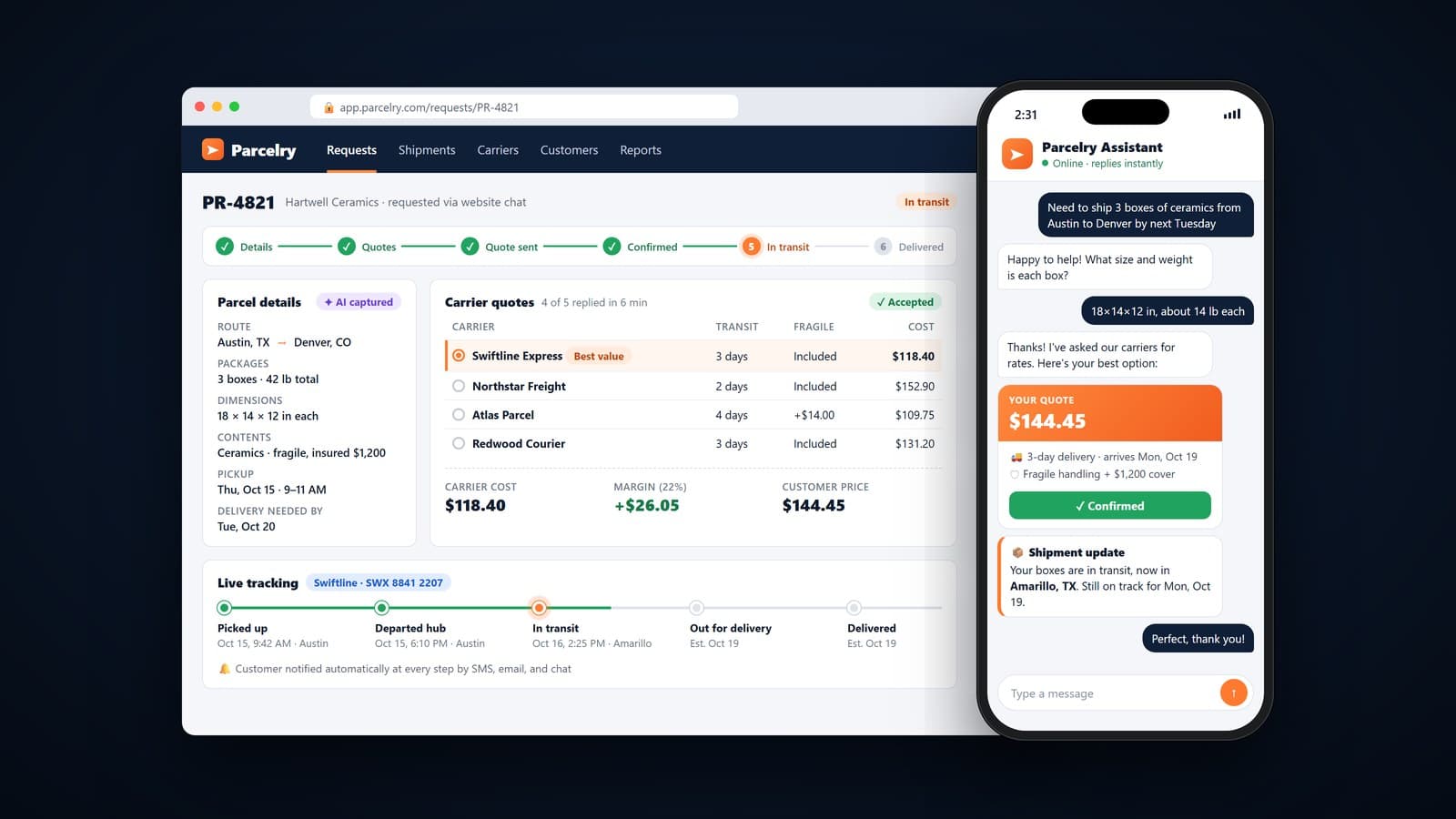
Freight brokerage software for a parcel shipping broker: an AI assistant gathers parcel details, requests quotes from carriers, picks the best one, adds Parcelry's margin, and sends the customer a price. Once they confirm, it tracks the shipment and keeps them updated until delivery.
Minutes
From first message to a priced quote, down from most of a day
5
Carriers asked for a rate on every request, automatically
Every step
Customers updated automatically from pickup to delivery

Northbeam Logistics
A real-time fleet management dashboard replacing three legacy spreadsheet tools.
3
Legacy tools replaced by one dashboard
~6 hrs/week
Dispatcher time saved on manual data entry
0
Double-booked loads since cutover
Services that pair with this work
Logistics software development questions
Can't find what you're looking for? Reach out and we'll answer directly.
What does a logistics software development company build?
Dispatch boards, fleet tracking dashboards, driver apps with proof of delivery, customer tracking portals, warehouse and inventory tools, and the integrations that tie them to your ELDs, accounting system, and customers' EDI. Most projects start with the one process that eats the most staff time today.
Can you integrate with our ELD or telematics provider?
Usually, yes. Samsara, Motive, Geotab, and most other major providers offer APIs for location, hours of service, and vehicle data. Access is tied to your account, so you request API credentials and we confirm during discovery what data and update frequency your plan includes.
Do you build EDI integrations for shippers and brokers?
Yes. The common transaction sets are 204 load tenders, 214 shipment status updates, and 210 freight invoices. We connect directly or through the EDI provider your trading partners already use, and test each partner's files before go-live, since no two partners implement the standard exactly the same way.
Should we buy a TMS or build custom logistics software?
Buy if your operation fits what the TMS was designed for. Build when your workflow is part of what sets you apart, or when the TMS falls short in one specific area. Many companies keep their TMS and add a custom driver app, quoting tool, or customer portal around it.
How long does it take to build logistics software?
A first version built around one workflow, such as a dispatch board or a customer tracking portal, can launch within a few weeks. Beyond that, the timeline depends on the features and integrations in scope, since each additional system (an ELD provider, an EDI partner, your accounting software) needs access and testing. Larger platforms are released in stages and run alongside your existing tools until your dispatchers trust the new data.